
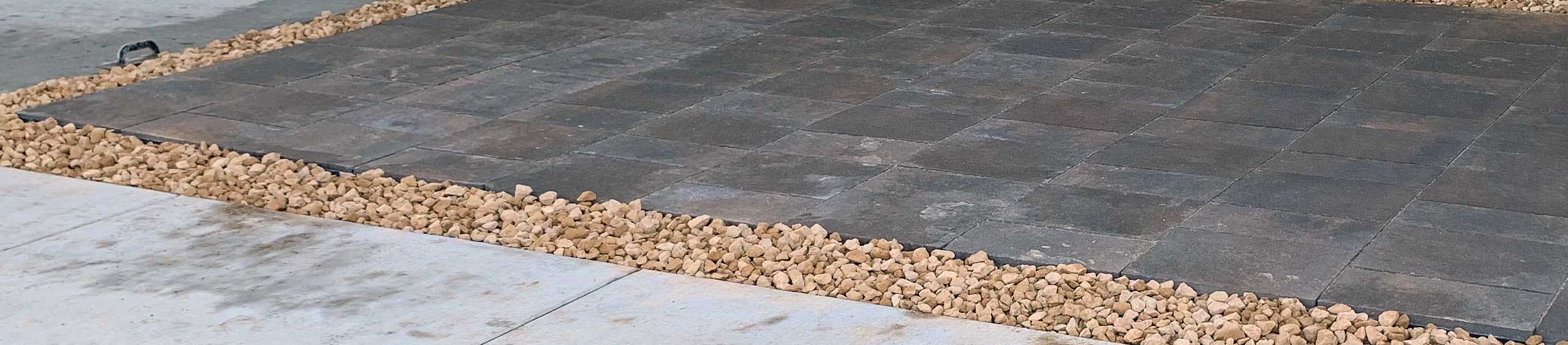
Erosion is slow until it is not. A bare slope loses a little every spring, then one heavy rain takes a foot of it and puts it in the driveway, the lake or the neighbor’s yard.
We stabilize ground that is moving, and we fix the water problem that is moving it.
What Erosion Looks Like Before It Gets Expensive
- Bare patches on a slope where grass will not hold
- Rills and small channels cut into a hillside after rain
- Soil, mulch or rock washed onto walks, drives or into the street
- Exposed roots, or a tree starting to lean
- A shoreline edge that keeps receding
- Sediment collecting at the bottom of a slope or in a low spot
- Undercutting at the base of a wall or foundation
Any of those means water is moving faster across that surface than the surface can take.

How We Fix It
Regrading. Often the real answer. Reshaping the slope so water sheets slowly instead of concentrating into a channel.
Redirecting the water. Erosion is a symptom. If a downspout, a swale or a neighbor’s runoff is feeding the problem, stabilizing the surface alone will not hold. This usually ties into drainage work.
Erosion control blanket and matting. Biodegradable blanket pinned over seeded ground holds soil and seed in place while roots establish, then breaks down.
Rock and riprap. Where water will always move fast, armor the surface. Dry creek beds, outlet protection, shoreline edges.

Terracing and retaining walls. Breaking one long slope into shorter benches. Steep ground often needs structure, not just cover. See retaining walls
Deep-rooted plantings. Native grasses and shrubs selected to hold soil. Slower than hard armor, better looking, and stronger over time.
Hydroseeding. Fast cover on bare ground, with the mulch and tackifier holding seed in place on grades where loose seed would wash. See hydroseeding
Most jobs use several of these together.
Shoreline and Waterfront
Lake and creek frontage has its own rules. Wave action, fluctuating water levels and ice all work on the bank, and permits may apply depending on the water body and the work.
We handle bank stabilization, riprap, native buffer plantings and regrading above the waterline, and we will tell you up front when something needs a permit or a different contractor.
Construction and Commercial Sites
Silt fence, inlet protection, temporary seeding and stabilized entrances for active sites. If you need compliance work on a job site, call and tell us what the requirements are.
Erosion Control Questions We Get
Sometimes, if the slope is mild and water is not concentrating there. On anything steeper or anywhere water is channeling, seed washes out before it roots. That is what matting and hydroseeding solve.
There is no single number. It depends on soil, how much water crosses it and how much sun it gets. Past a certain point the answer is structure, meaning terracing or a wall.
It is your problem when it is your soil leaving. Whether it is your responsibility to fix is a different question, and sometimes a legal one. We can tell you what is happening and where the water is coming from.
Spring and fall. Fall is often better because cool, wet conditions help new plantings establish before winter and you are stabilized before spring melt, which is when the most damage happens here.
Yes. Rebuilding lost grade, removing sediment and restoring the surface is part of the job.
Once the slope is stable it needs cover. Hydroseeding is the fastest way to get roots into bare ground before the next rain.
Get an Erosion Control Quote
Send photos or tell us what you are seeing and we will come look at it.
Request a free quote or call (651) 775-4446.
