
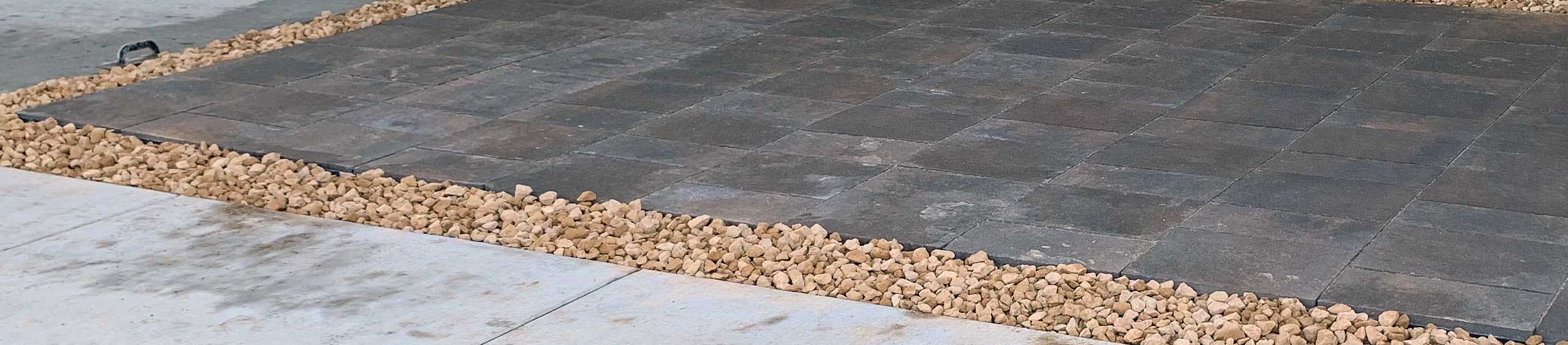
A patio is the part of the yard you actually use. Morning coffee, the grill, a fire going in October, somewhere for people to sit that is not the kitchen.
John’s ProCare builds paver patios across Forest Lake and the northeast metro, and we build them for this climate. The part you see is the pavers. The part that decides whether you still like it in ten years is underneath.
Why Pavers Instead of a Poured Slab
A poured concrete slab is one solid piece. When the ground underneath it moves, and in Minnesota it always does, the slab cracks and there is no fixing it short of tearing it out.
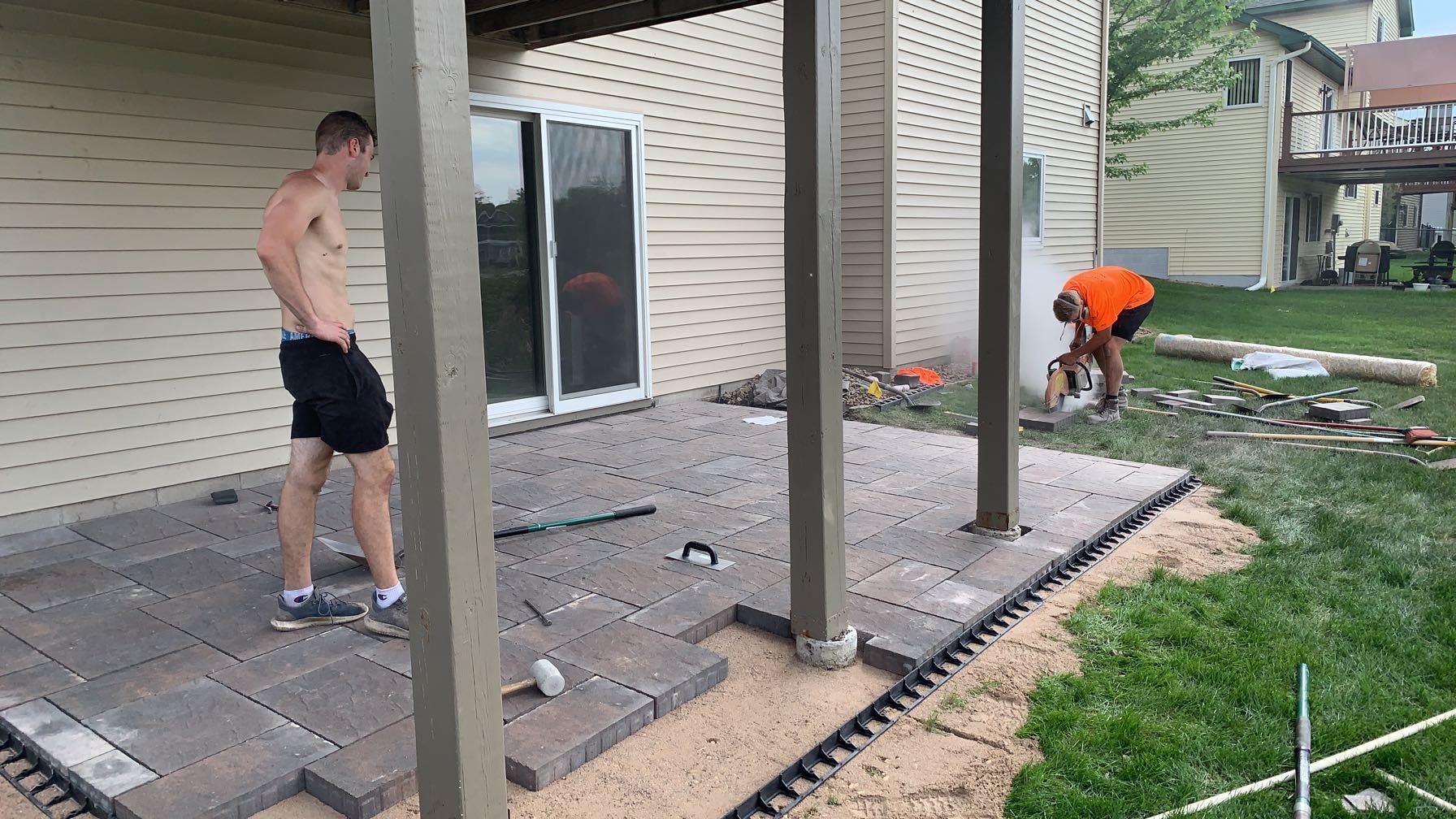
A paver patio is hundreds of individual units sitting on a flexible base. When the ground shifts, the field absorbs it. If a section ever does settle, we lift those pavers, correct the base underneath and set the same pavers back down. You are out labor, not a new patio.
Pavers also give you options a slab does not: borders in a second color, curves instead of corners, and the ability to tie steps, seat walls and a fire pit area into the same design.
What Goes Under a Patio That Lasts
Three layers, and each one has a job.
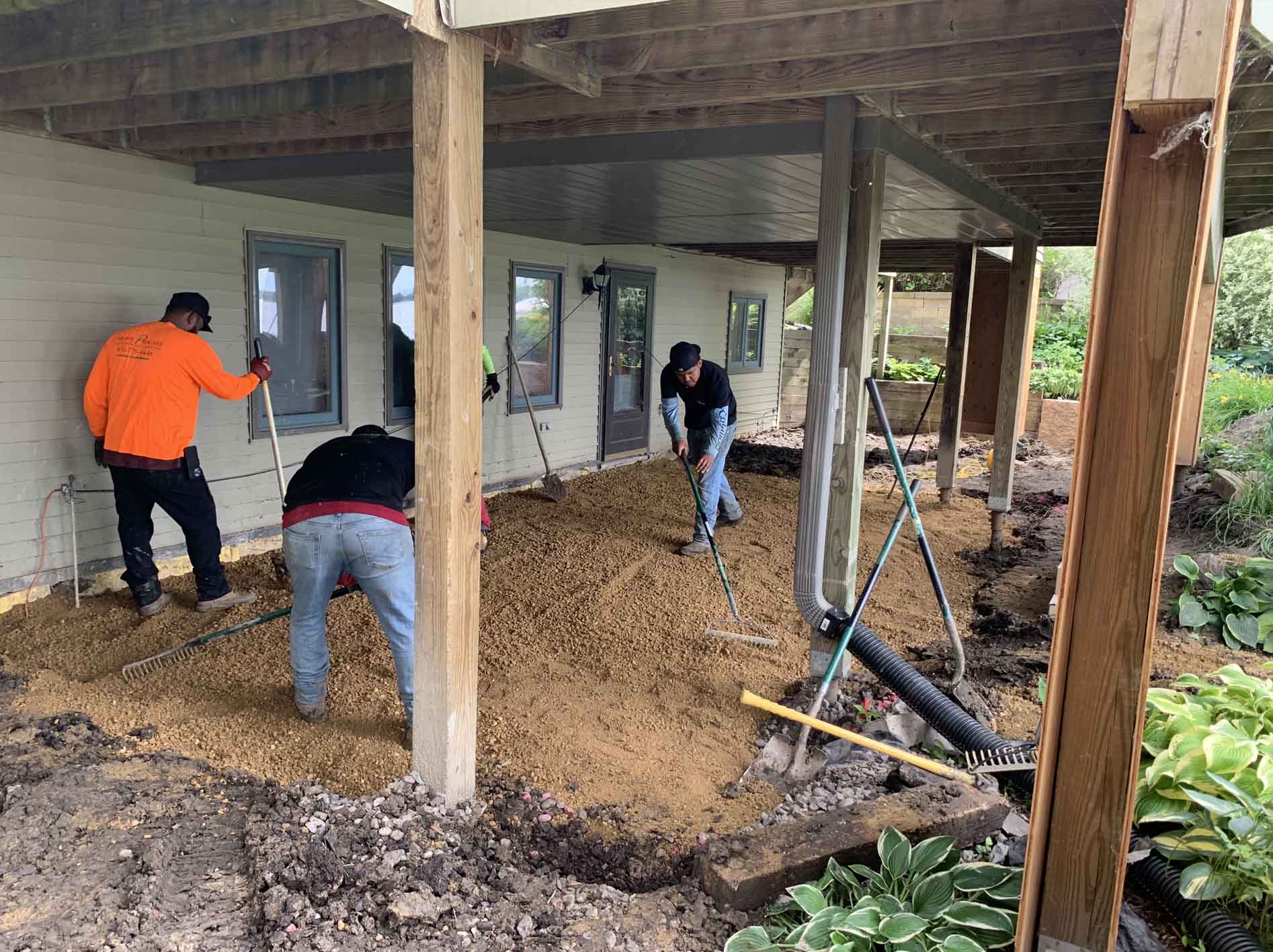
The aggregate base. Crushed, angular rock installed in lifts and compacted as we go. This is the structural layer. It carries the load and spreads it out. The depth comes from what the patio has to hold and what soil it is sitting on, not from a number off the internet.
The bedding layer. A thin, consistent layer of coarse sand or chip that the pavers set into. This is for leveling only. It is not support, and treating it as support is the single most common reason patios fail.
The pavers, plus joint sand and edge restraint. The edge restraint is what keeps the field from spreading outward over time. Skip it and you get widening joints and loose pavers around the perimeter within a few seasons.
Heavy clay runs through most of this area, and clay holds water instead of draining it. That means more base here than the same patio would need on sand, and it means the patio has to be pitched so water runs away from the house rather than sitting on it.
Want the detail? We wrote it up in Paver Patio Base: Why Patios Sink and How to Build One That Does Not.
What We Build
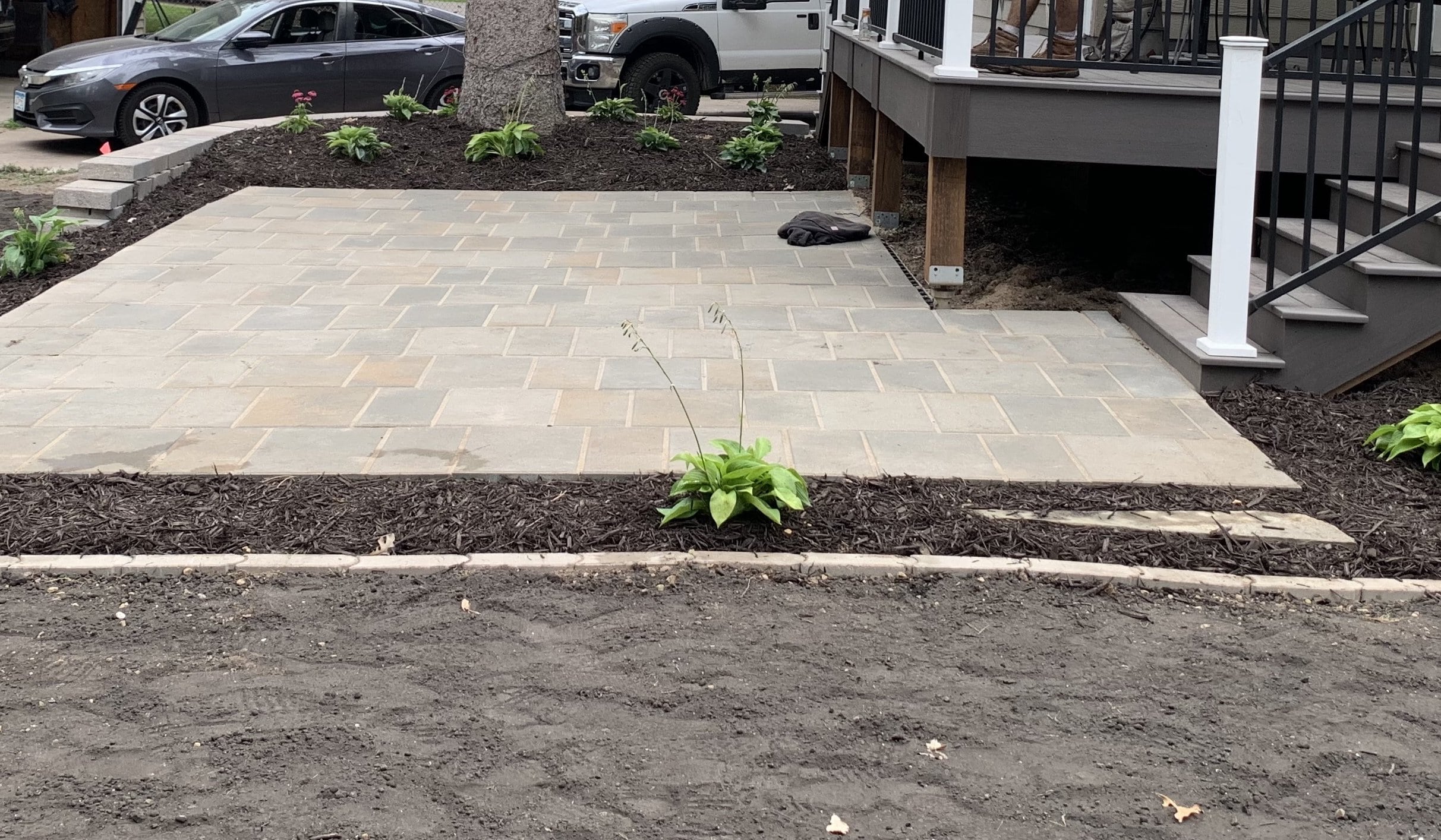
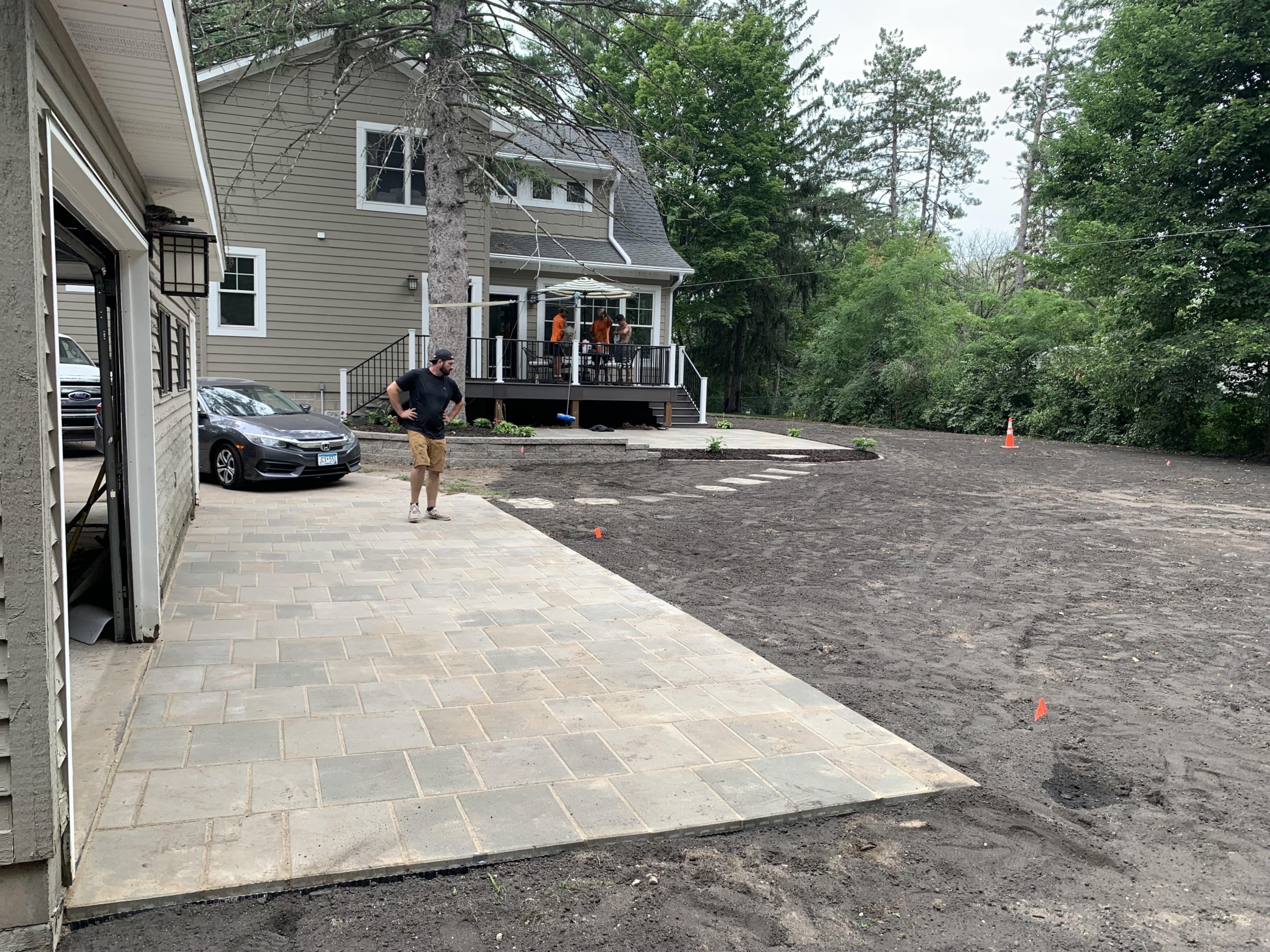
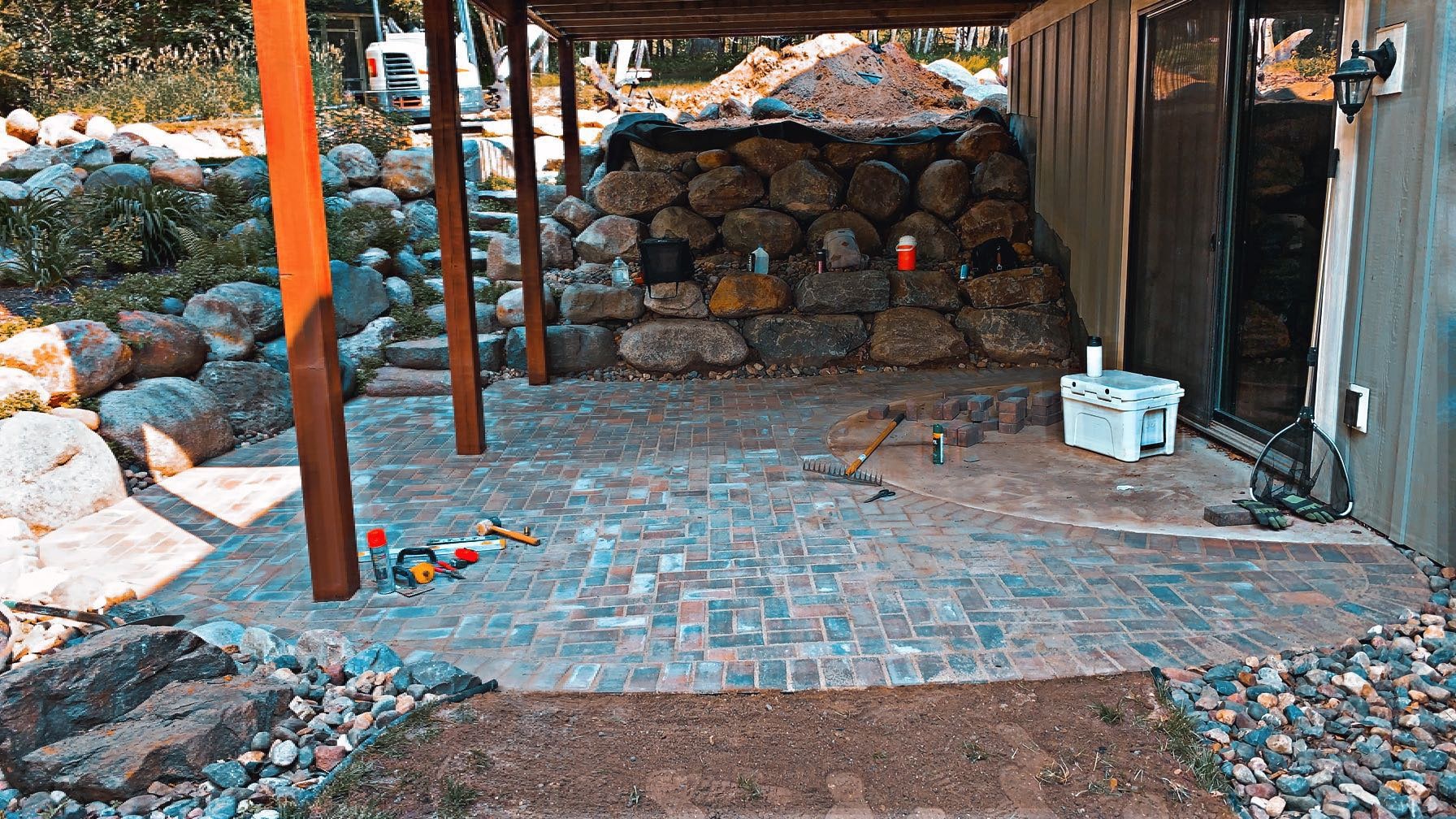
Patios. Anything from a small sitting area off the back door to a full outdoor living space.
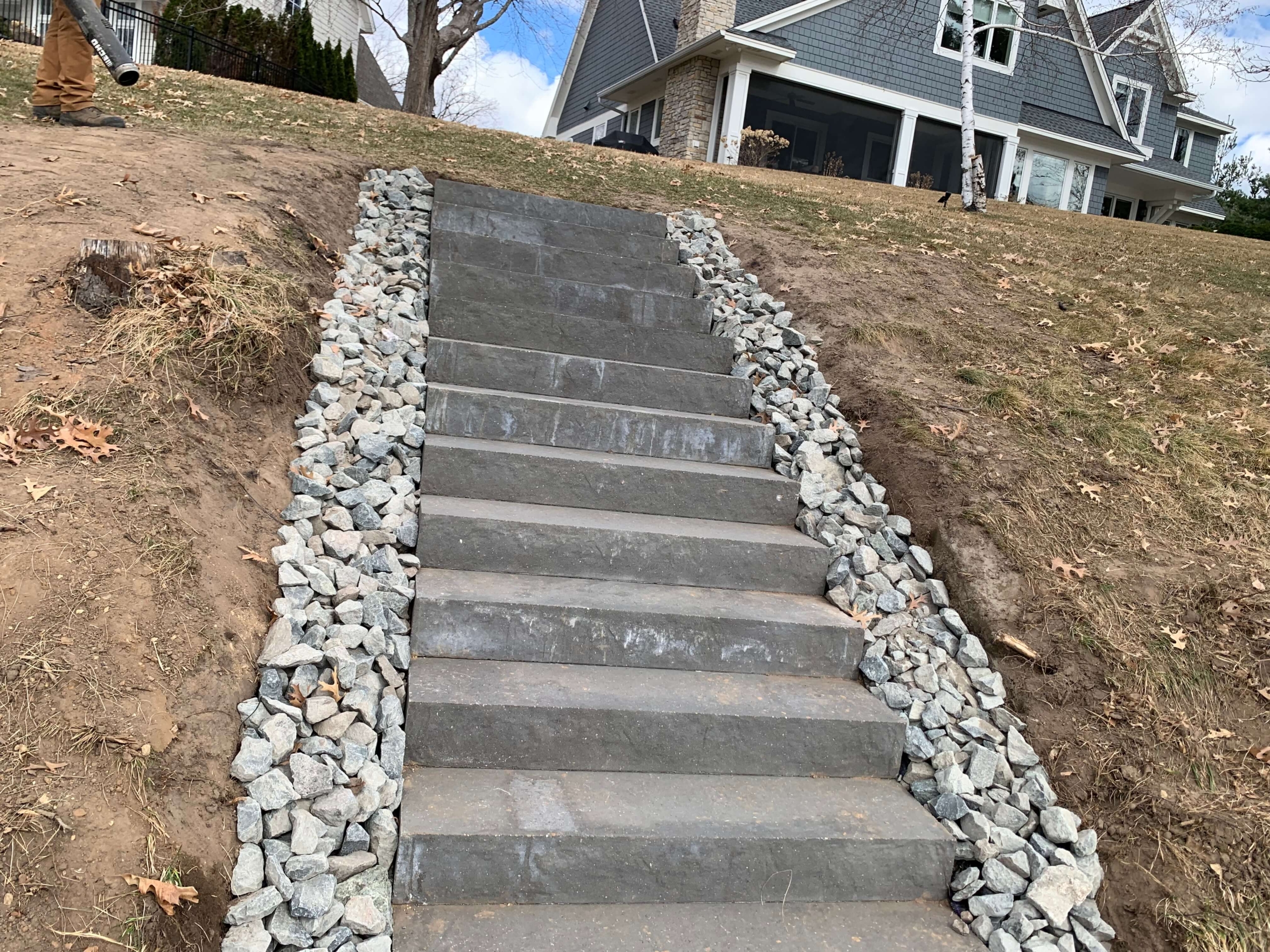
Steps and grade changes. Where the yard drops away from the house, we build steps into the design rather than bolting them on after.
Seat walls and raised borders. Built-in seating around a patio or fire pit, using the same block family as the patio so it reads as one piece of work.
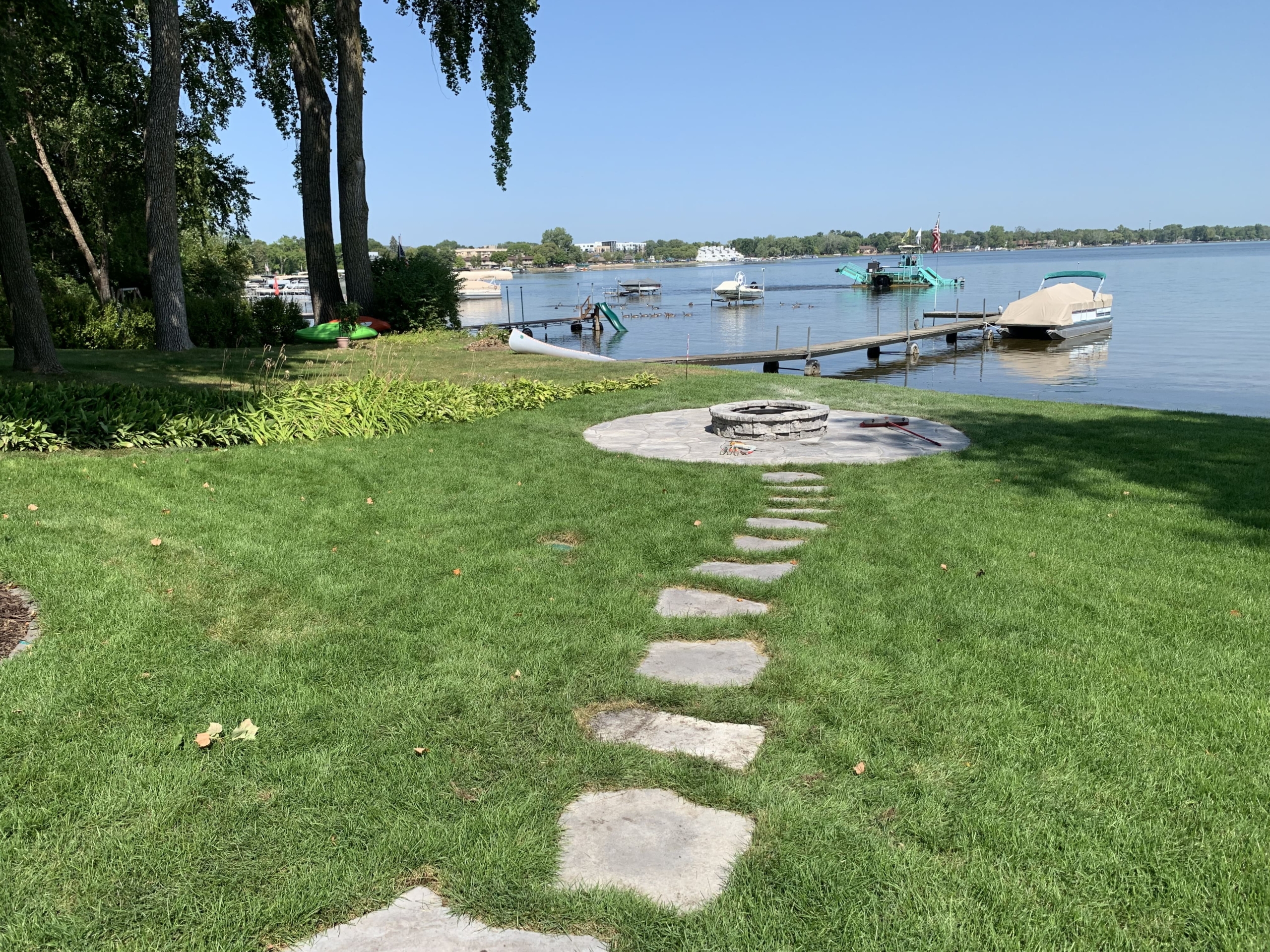
Fire pit areas. Set into the patio with the right clearances and surfaces.
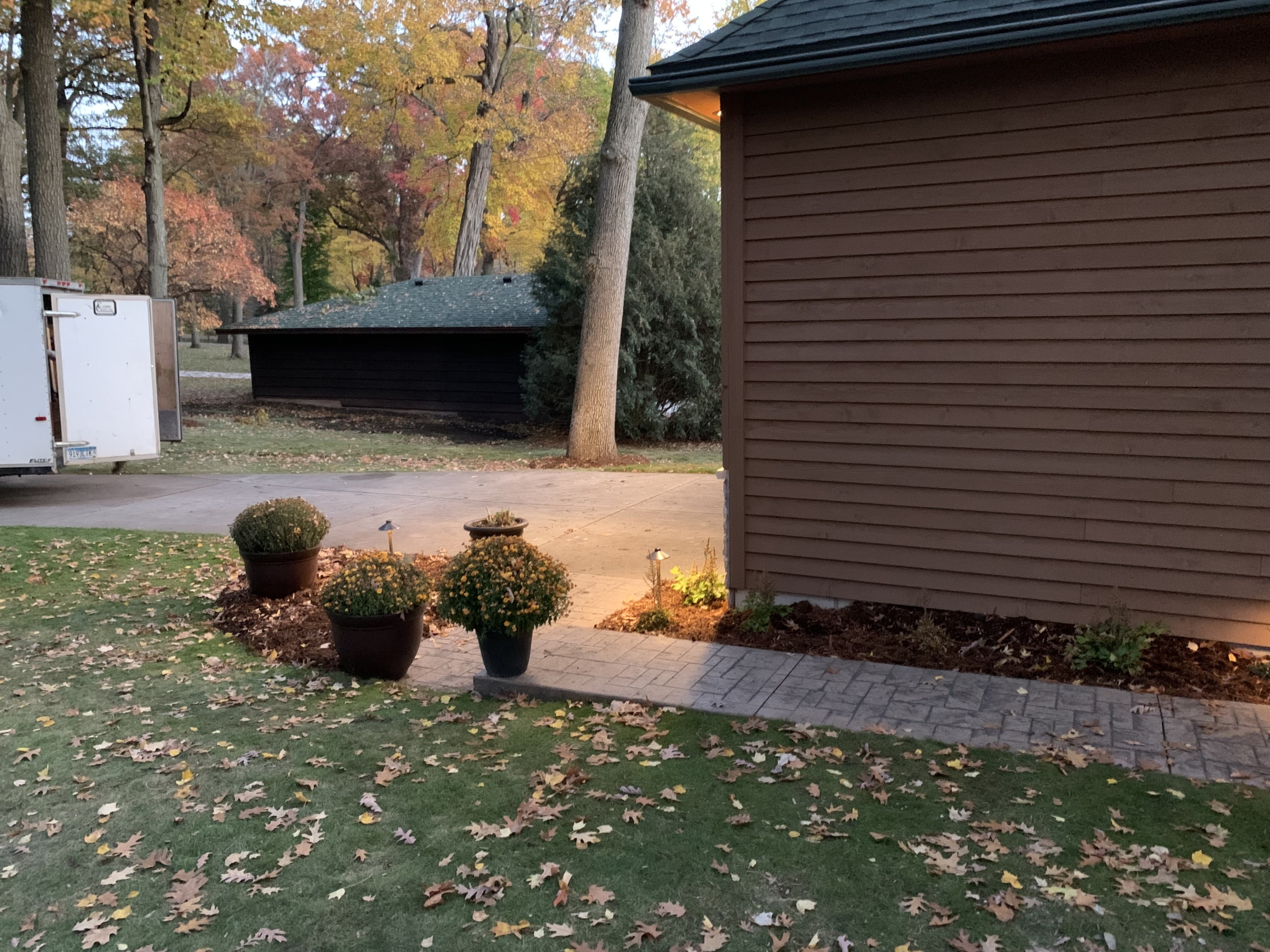
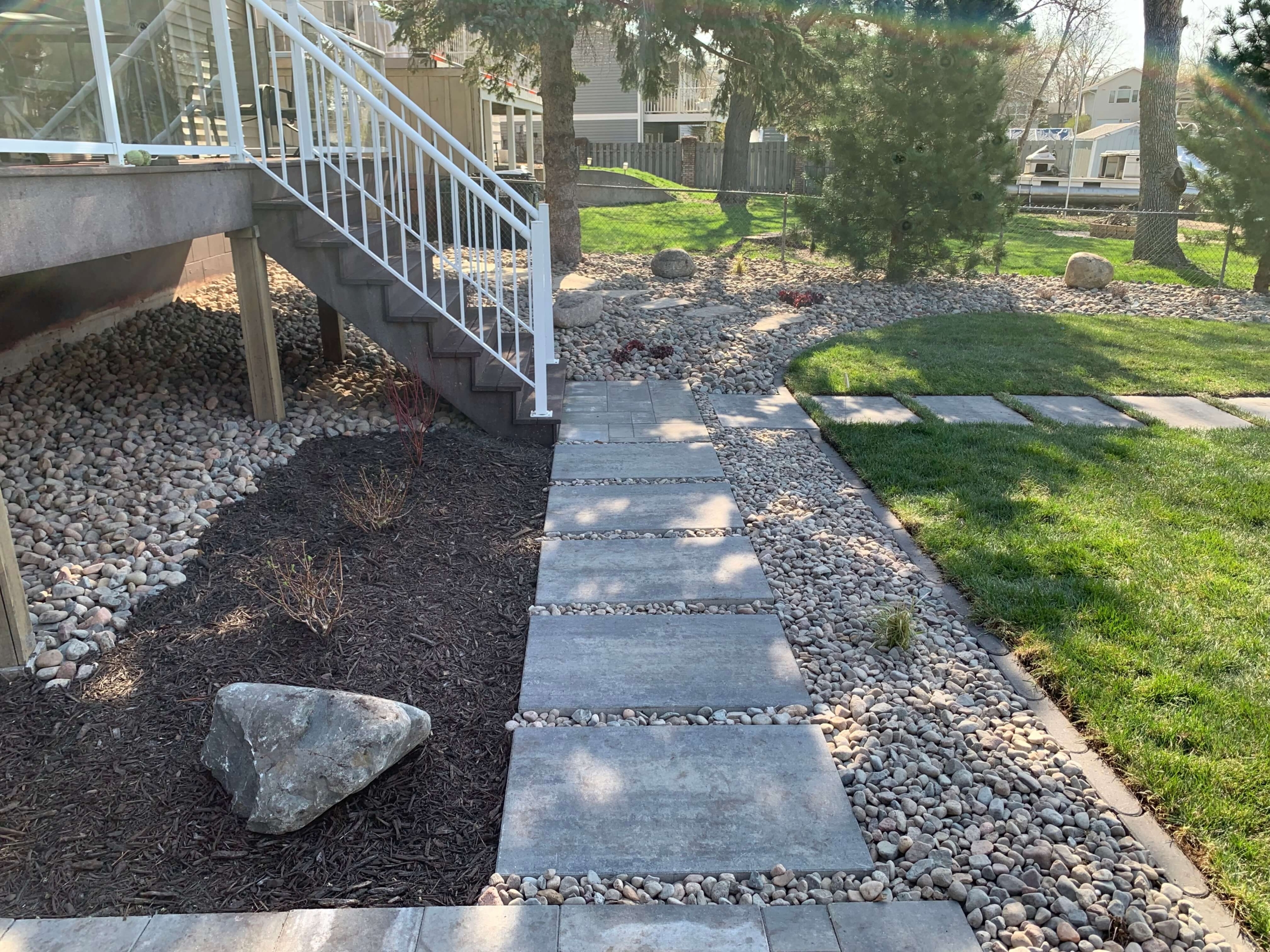
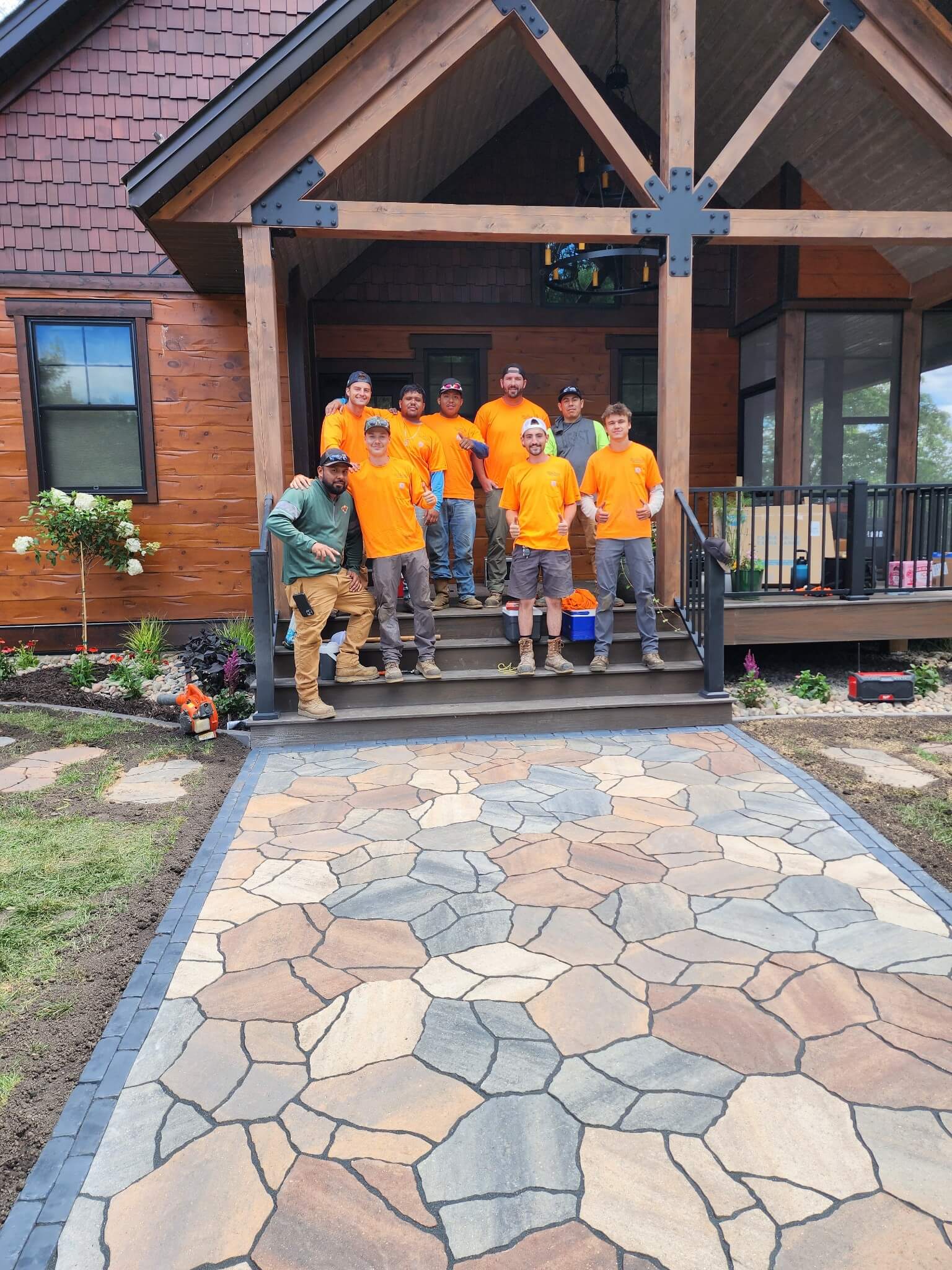
Walkways. Front walks and paths connecting the patio to the driveway, garage or yard, in a pattern that matches the patio.
Repairs to patios somebody else built. We get called out to plenty of these. If the base is sound and a section has settled, it is a reset, not a rebuild.
Paver patios are just one part of creating a beautiful outdoor space. Explore our hardscaping services to learn about more ways to improve your yard.
Planning a Patio That Fits the Yard
- Size it for how you will actually use it. A table, chairs and a grill take up more room than people expect. We lay it out on the ground before anything gets dug.
- Get the water sorted first. If the spot already collects water, the patio will not fix that, it will sit in it. Sometimes drainage work comes before the patio.
- Connect it to the house. Patios feel right when they come straight off the door. A grade change means steps, and steps are easier to get right when they are in the plan from the start.
- Think about the edges. A planting bed, a seat wall or a border course keeps the patio from looking like a slab dropped in the lawn.
- Fall is a good time to build. The ground is firm, the schedule is open, and the patio is settled and ready the day spring arrives.
Paver Patio Questions We Get
Most residential patios are a few days of work once we start, depending on size, access and how much excavation the base needs. We will give you a real timeline when we look at the property.
Often, yes. Paver lines change over the years, so an exact match is not always possible, but we can usually get very close or design the new work as a deliberate accent.
Polymeric joint sand locks the joints and keeps most of it out. Nothing is completely weed-proof outdoors, but a properly sanded patio is close, and resanding every several years keeps it that way.
Usually not. If the base is sound, we pull the affected pavers, correct the bedding and reset them. If the patio was laid on sand with no real base, there is no fix that lasts and it gets rebuilt.
We handle layout and design as part of the job. You tell us how you want to use the space and we will put a plan together.
A Few of our Paver Patio Projects












Get a Patio Quote
Tell us what you are picturing and where it goes, and we will walk the property, talk through what the base needs, and give you a real number.
Request a free quote or call (651) 775-4446.
See our retaining wall work if the patio needs a grade change, or our drainage services if water is the bigger issue on your property.
