
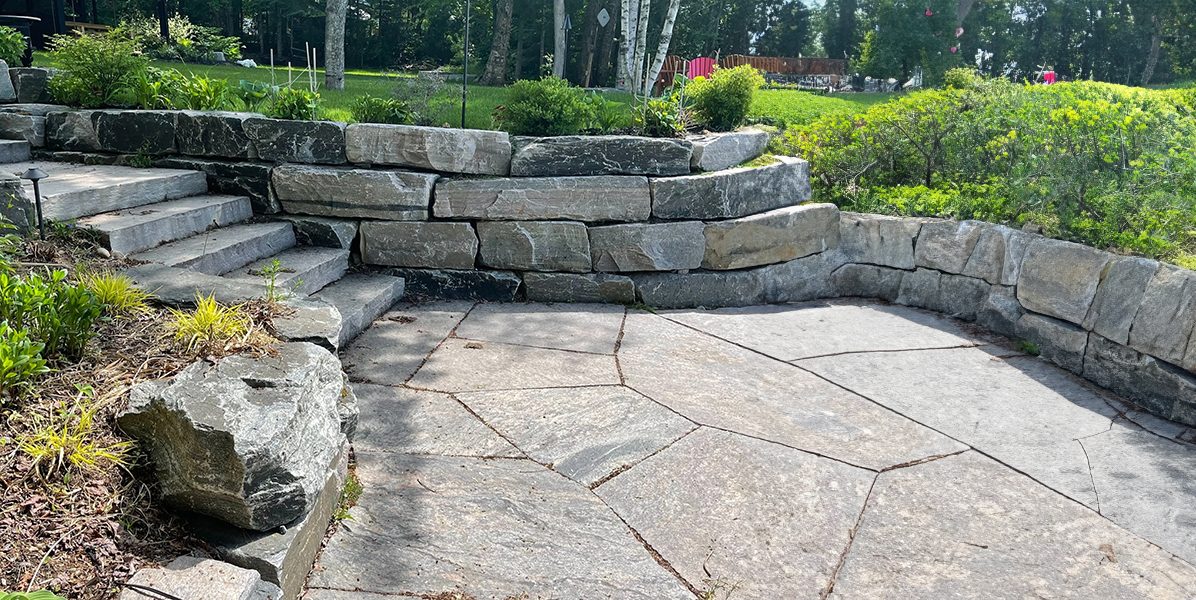
Signs Your Property Needs a Retaining Wall
If you own property in Forest Lake or the surrounding area, you already know Minnesota isn’t gentle on yards. Freeze-thaw cycles, heavy spring rain, and clay-heavy soil put constant pressure on slopes and grading. A retaining wall isn’t just a landscaping feature. It’s a structural fix for a problem that only gets worse with time.
Here are five signs your property is telling you it needs one, along with what typically happens if those signs get ignored.
1. You’re Seeing Soil Erosion After Every Rainstorm
A little erosion after a big storm is normal. Erosion that keeps happening in the same spot every time it rains is not. If you’re noticing bare patches where grass used to grow, small gullies cutting across a slope, or soil washing onto your driveway or sidewalk, that’s a slope telling you it can no longer hold itself together.
What happens if you wait: erosion compounds. Each rain event removes a little more soil, which means the next storm has even less resistance to work against. Left alone, this typically ends in a much larger regrading project instead of a straightforward wall installation.
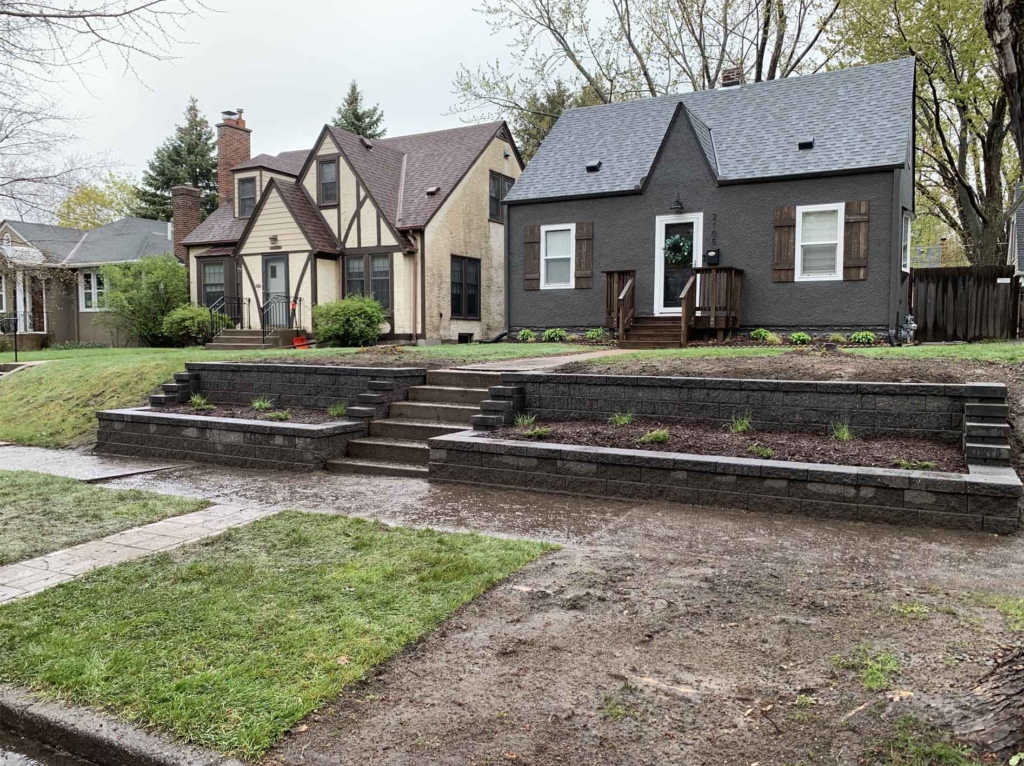
This was a recent job we completed
2. Cracks Are Appearing in Your Foundation, Patio, or Driveway
Cracking concrete doesn’t always mean a wall problem, but when it shows up near a slope or grade change, it’s one of the more serious signs to pay attention to. Shifting soil around your foundation, driveway, or patio often means the ground underneath is moving in ways it shouldn’t. This is especially common on properties where a hillside sits close to a structure.
What happens if you wait: foundation and structural repairs cost significantly more than a retaining wall, and by the time cracking is visible, movement has usually been happening beneath the surface for a while already. If you’re seeing this, it’s worth getting a professional opinion sooner rather than later. You can get in touch with our team through the contact us page to have someone take a look.
3. Water Is Pooling Where It Shouldn’t
Standing water near a foundation, in a low spot in the yard, or along the base of a slope is one of the clearest signals that grading and drainage are working against each other. Retaining walls and drainage systems go hand in hand. A wall holds soil in place, but it needs somewhere for water to go once it’s diverted.
This is often where retaining wall needs and drainage needs overlap. If you’re dealing with pooling water in addition to a slope issue, it’s worth having both evaluated together. Our drainage solutions page covers how we approach water management on properties like this.
What happens if you wait: pooling water saturates soil, which weakens its ability to hold a slope in place at all. This is one of the fastest paths from “minor yard issue” to “major erosion event.”
4. Your Yard Has a Noticeable Slope With No Structure Holding It
Not every slope needs a retaining wall, but a slope with no terracing, no structure, and a steep enough grade to make mowing or walking difficult is usually a candidate. Steep, unstructured slopes are harder to landscape, harder to maintain, and more prone to erosion than a slope that’s been broken up with a wall and level terraces.
This is also a usability issue as much as a structural one. A retaining wall can turn an unusable, hard-to-mow hillside into flat, functional yard space, whether that’s a garden bed, a patio area, or simply lawn you can actually walk across without sliding.
We see this often on properties near lakes and wooded lots, where the natural terrain includes more elevation change than a typical suburban yard. A slope that felt manageable when the property was first built often becomes harder to deal with over time, especially as tree roots die off or nearby construction changes how water moves across the land. What looks like a cosmetic issue, an oddly shaped lawn or a patch of yard nobody quite knows what to do with, is frequently a sign that the grade was never properly addressed in the first place.
What happens if you wait: unstructured slopes tend to erode unevenly over time, which makes the eventual fix more complex and more expensive than addressing it while the slope is still intact.
5. A Neighboring Property Sits Higher or Lower Than Yours
Grade differences between neighboring lots are extremely common, especially in established neighborhoods. But when there’s a noticeable elevation change and no retaining structure in place, that difference in grade puts pressure on whichever property sits lower. Over time, this can lead to soil migrating from the higher lot onto the lower one, water runoff issues, and in some cases, disputes between neighbors about property lines and responsibility.
What happens if you wait: these situations rarely resolve on their own, and the longer a grade difference goes unaddressed, the more soil movement and water damage accumulates on the downhill side.
What to Do If You’re Seeing These Signs
If one or more of these signs sounds familiar, the smartest move is getting a professional assessment before the problem grows. A retaining wall is a permanent, structural solution, and getting the design, drainage, and materials right the first time matters far more than it does with most other landscaping projects.
We build retaining walls throughout Forest Lake and the surrounding area, and we account for Minnesota’s freeze-thaw cycles and drainage needs from the start of every project, not as an afterthought. You can learn more about our approach on our retaining walls page, or see completed projects on our before and after page.
If you’re in need of a Retaining Wall Contractor in Forest Lake, MN, make sure you contact John’s ProCare Today!
Signs Your Property Needs a Retaining Wall
If you own property in Forest Lake or the surrounding area, you already know Minnesota isn’t gentle on yards. Freeze-thaw cycles, heavy spring rain, and clay-heavy soil put constant pressure on slopes and grading. A retaining wall isn’t just a landscaping feature. It’s a structural fix for a problem that only gets worse with time.
Here are five signs your property is telling you it needs one, along with what typically happens if those signs get ignored.
1. You’re Seeing Soil Erosion After Every Rainstorm
A little erosion after a big storm is normal. Erosion that keeps happening in the same spot every time it rains is not. If you’re noticing bare patches where grass used to grow, small gullies cutting across a slope, or soil washing onto your driveway or sidewalk, that’s a slope telling you it can no longer hold itself together.
What happens if you wait: erosion compounds. Each rain event removes a little more soil, which means the next storm has even less resistance to work against. Left alone, this typically ends in a much larger regrading project instead of a straightforward wall installation.
This was a recent job we completed
2. Cracks Are Appearing in Your Foundation, Patio, or Driveway
Cracking concrete doesn’t always mean a wall problem, but when it shows up near a slope or grade change, it’s one of the more serious signs to pay attention to. Shifting soil around your foundation, driveway, or patio often means the ground underneath is moving in ways it shouldn’t. This is especially common on properties where a hillside sits close to a structure.
What happens if you wait: foundation and structural repairs cost significantly more than a retaining wall, and by the time cracking is visible, movement has usually been happening beneath the surface for a while already. If you’re seeing this, it’s worth getting a professional opinion sooner rather than later. You can get in touch with our team through the contact us page to have someone take a look.
3. Water Is Pooling Where It Shouldn’t
Standing water near a foundation, in a low spot in the yard, or along the base of a slope is one of the clearest signals that grading and drainage are working against each other. Retaining walls and drainage systems go hand in hand. A wall holds soil in place, but it needs somewhere for water to go once it’s diverted.
This is often where retaining wall needs and drainage needs overlap. If you’re dealing with pooling water in addition to a slope issue, it’s worth having both evaluated together. Our drainage solutions page covers how we approach water management on properties like this.
What happens if you wait: pooling water saturates soil, which weakens its ability to hold a slope in place at all. This is one of the fastest paths from “minor yard issue” to “major erosion event.”
4. Your Yard Has a Noticeable Slope With No Structure Holding It
Not every slope needs a retaining wall, but a slope with no terracing, no structure, and a steep enough grade to make mowing or walking difficult is usually a candidate. Steep, unstructured slopes are harder to landscape, harder to maintain, and more prone to erosion than a slope that’s been broken up with a wall and level terraces.
This is also a usability issue as much as a structural one. A retaining wall can turn an unusable, hard-to-mow hillside into flat, functional yard space, whether that’s a garden bed, a patio area, or simply lawn you can actually walk across without sliding.
We see this often on properties near lakes and wooded lots, where the natural terrain includes more elevation change than a typical suburban yard. A slope that felt manageable when the property was first built often becomes harder to deal with over time, especially as tree roots die off or nearby construction changes how water moves across the land. What looks like a cosmetic issue, an oddly shaped lawn or a patch of yard nobody quite knows what to do with, is frequently a sign that the grade was never properly addressed in the first place.
What happens if you wait: unstructured slopes tend to erode unevenly over time, which makes the eventual fix more complex and more expensive than addressing it while the slope is still intact.
5. A Neighboring Property Sits Higher or Lower Than Yours
Grade differences between neighboring lots are extremely common, especially in established neighborhoods. But when there’s a noticeable elevation change and no retaining structure in place, that difference in grade puts pressure on whichever property sits lower. Over time, this can lead to soil migrating from the higher lot onto the lower one, water runoff issues, and in some cases, disputes between neighbors about property lines and responsibility.
What happens if you wait: these situations rarely resolve on their own, and the longer a grade difference goes unaddressed, the more soil movement and water damage accumulates on the downhill side.
What to Do If You’re Seeing These Signs
If one or more of these signs sounds familiar, the smartest move is getting a professional assessment before the problem grows. A retaining wall is a permanent, structural solution, and getting the design, drainage, and materials right the first time matters far more than it does with most other landscaping projects.
We build retaining walls throughout Forest Lake and the surrounding area, and we account for Minnesota’s freeze-thaw cycles and drainage needs from the start of every project, not as an afterthought. You can learn more about our approach on our retaining walls page, or see completed projects on our before and after page.
If you’re in need of a Retaining Wall Contractor in Forest Lake, MN, make sure you contact John’s ProCare Today!
Get Your Drainage Problem Solved
Standing water only gets worse the longer you ignore it. What starts as a soggy lawn can become foundation damage, and the fix only gets more expensive over time.
If you are dealing with standing water, a wet basement, or a yard you cannot use, John’s ProCare can help. We install and service French drains and complete drainage solutions across Forest Lake and central Minnesota.
